
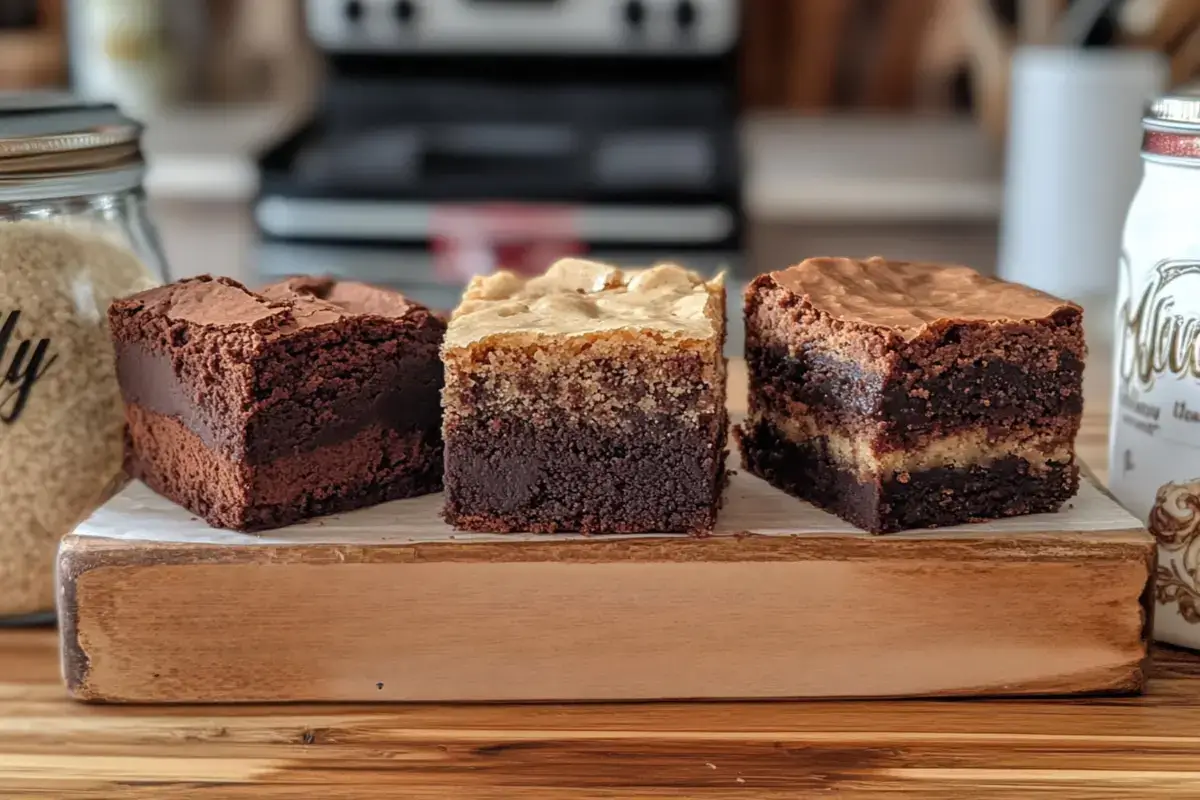
Hey everyone, Jessika here from Boldy Recipes! One of the most common questions I get from readers is about brownie types ,specifically, what makes them different and which one they should make. After baking thousands of brownies over my career and teaching brownie workshops across the country, I can tell you there are three distinct types: fudgy, cakey, and chewy. Each has its own texture, ingredient ratio, and devoted following. Let me break down exactly what sets them apart so you can choose (or create) your perfect brownie !
The Three Types of Brownies
1. Fudgy Brownies
Texture: Dense, moist, intensely rich, almost truffle-like. They’re sticky, gooey in the center, and have a concentrated chocolate flavor.
What Makes Them Fudgy:
- High fat ratio: More butter and chocolate relative to flour
- More eggs: Extra egg yolks add richness and moisture
- Less flour: Minimal flour (usually 1 cup or less for a 9×13 pan)
- Little to no leavening: No baking powder or baking soda
Key Characteristics:
- Very moist, almost undercooked appearance
- Sink slightly in the center as they cool
- Cut cleanly but leave chocolate residue on the knife
- Best eaten with a fork, sometimes too gooey to pick up
When to Choose Fudgy: Perfect for true chocolate lovers who want the most intense, decadent brownie experience. Ideal for serving à la mode or as a plated dessert.
My Take: This is my personal favorite and what I make most often. The chocolate intensity is unmatched, though they’re quite rich , a small piece satisfies.
2. Cakey Brownies
Texture: Light, fluffy, tender crumb similar to chocolate cake. They’re airy with a softer bite and less dense mouthfeel.
What Makes Them Cakey:
- More flour: Higher flour ratio creates structure (1½-2 cups for 9×13 pan)
- Leavening agents: Baking powder or baking soda makes them rise
- Less fat: Reduced butter compared to fudgy versions
- More eggs: Often uses whole eggs, beaten to incorporate air
Key Characteristics:
- Rise higher and have visible air pockets
- Dry, clean crumb (won’t leave chocolate on the knife)
- Can be picked up and eaten like a cookie bar
- Lighter chocolate flavor, less intense
When to Choose Cakey: Great for people who prefer less-intense chocolate or want something lighter. Perfect for kids’ parties or serving large crowds where richness might be overwhelming.
My Take: While I respect cakey brownies, they’re essentially chocolate cake in bar form. If you love cake texture, these are for you , but for me, they’re missing that signature brownie density.
3. Chewy Brownies
Texture: The middle ground , dense like fudgy but with more structure. They have a satisfying chew and slight resistance when you bite.
What Makes Them Chewy:
- Brown sugar: Using brown sugar (or a brown/white sugar combo) creates chewiness
- Balanced flour ratio: Medium flour amount (1¼ cups for 9×13 pan)
- Moderate fat: Not as much as fudgy, more than cakey
- Proper baking: Baked just until set, creating that chewy texture
Key Characteristics:
- Shiny, crackly top (most pronounced in this category)
- Dense but not gooey
- Firm enough to pick up, substantial enough to satisfy
- Perfect chocolate balance – rich but not overwhelming
When to Choose Chewy: The crowd-pleaser option that appeals to both fudgy and cakey lovers. Perfect for bake sales, potlucks, or when you’re unsure of preferences.
My Take: If fudgy brownies are too intense for an event, I go with chewy. They’re approachable, universally loved, and have that iconic brownie appearance with the crackly top.
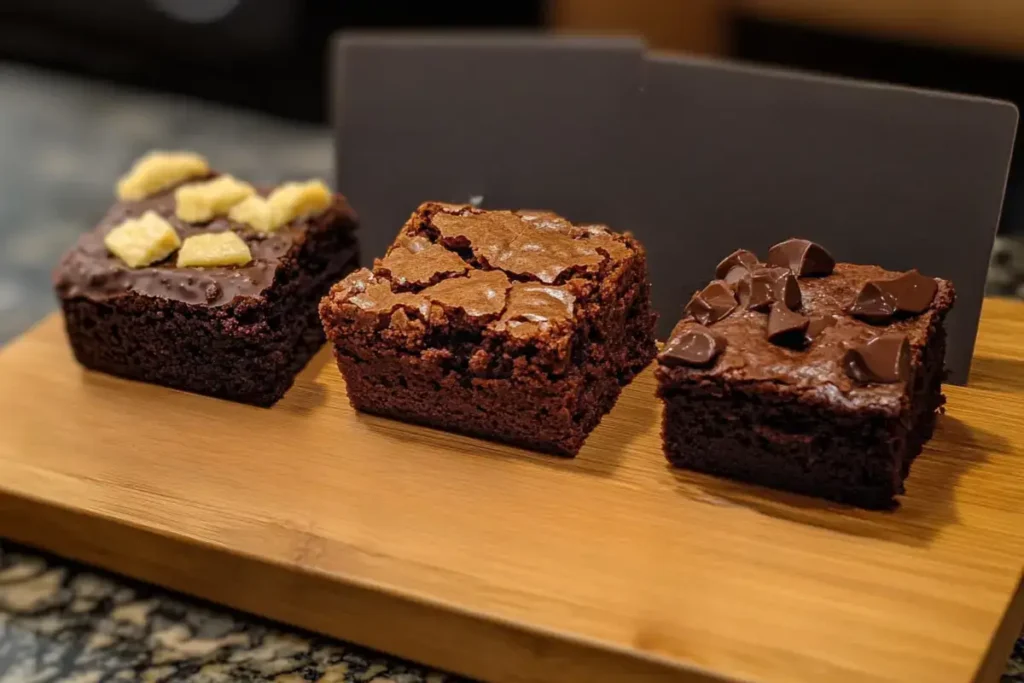
How to Identify the Type You’re Making?
Look at your recipe’s ratio:
Fudgy Formula: 1 cup flour, 1 cup (or more) butter, 4+ eggs, no leavening
Cakey Formula: 1½+ cups flour, ½-¾ cup butter, baking powder/soda included
Chewy Formula: 1¼ cups flour, ¾ cup butter, brown sugar included, no leavening
Baking temperature also matters: Fudgy brownies often bake at lower temps (325°F), while cakey versions bake higher (350°F).
Can You Adjust Recipes Between Types?
Yes! After years of experimenting, I’ve learned you can shift between types by tweaking ratios:
To Make Fudgier: Reduce flour by ¼ cup, add 2 tablespoons butter, remove any leavening, lower oven temperature to 325°F.
To Make Cakier: Add ¼ cup flour, add ½ teaspoon baking powder, reduce butter by 2 tablespoons.
To Make Chewier: Replace half the white sugar with brown sugar, use medium flour amounts, bake at 325°F just until set.
My Professional Recommendation
There’s no “best” type , only personal preference. I suggest making all three to discover your favorite. In my kitchen, I keep recipes for each type because they serve different purposes:
- Fudgy: For chocolate devotees and special occasions
- Chewy: For parties and general crowds
- Cakey: For those who specifically request lighter chocolate treats
Understanding these differences makes you a better baker. You’ll know exactly what adjustments to make when a recipe doesn’t match your texture preference.
Frequently Asked Questions
Which type of brownie is most popular?
Chewy brownies are the most universally loved, appealing to the widest audience. However, serious chocolate lovers typically prefer fudgy, while those who enjoy lighter desserts choose cakey. It’s very personal preference-based.
How can I tell what type a recipe will make?
Check the flour-to-fat ratio and whether it includes leavening. Low flour (1 cup or less) + high fat + no leavening = fudgy. High flour (1½+ cups) + leavening = cakey. Medium flour + brown sugar = chewy.
Can box mix brownies be fudgy, cakey, or chewy?
Yes! Box mixes usually aim for chewy but include adjustment instructions. Adding extra eggs makes them cakier, reducing eggs and adding butter makes them fudgier. Check the package for variations.
Do fudgy brownies have undercooked batter?
No , they’re fully cooked but intentionally moist and dense. The toothpick test for fudgy brownies should show moist crumbs (not wet batter). Internal temperature should reach 165°F for food safety.