
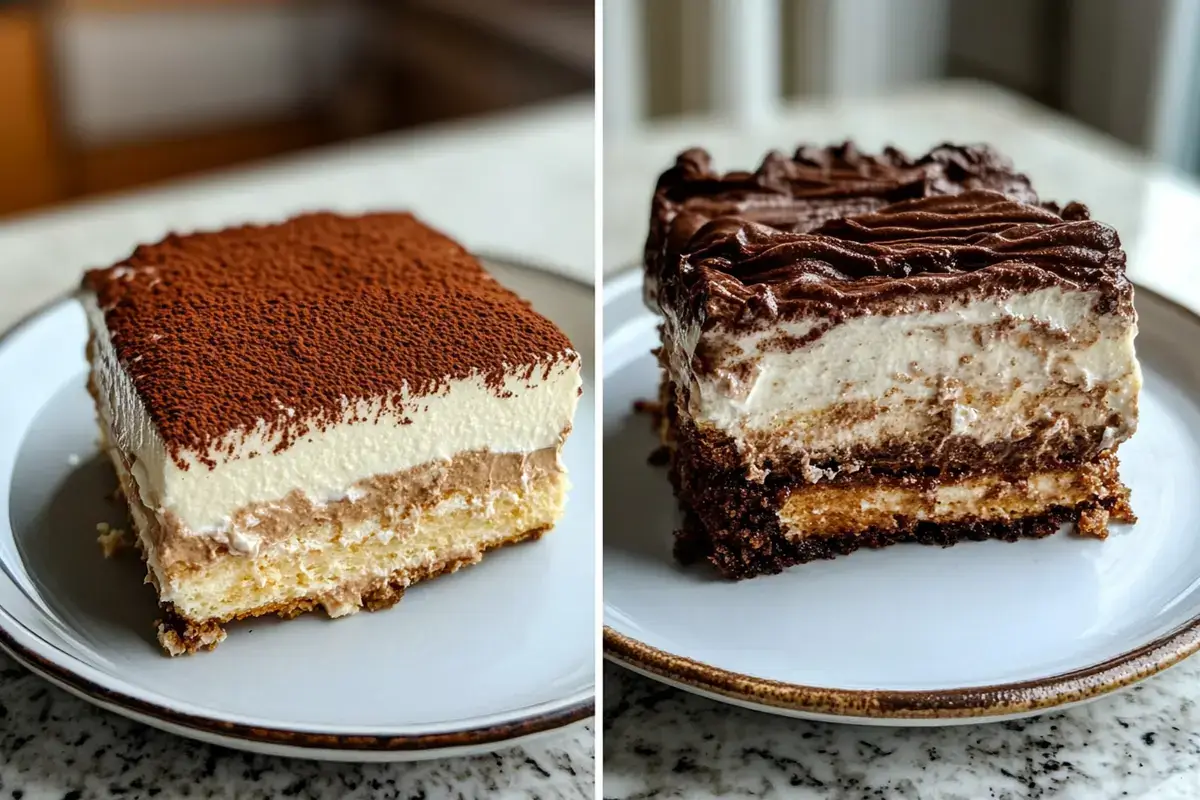
Hey everyone, Jessika here from Boldy Recipes! After training in a small trattoria in Tuscany and making countless tiramisus in my own kitchen over the years, I’ve noticed significant differences between authentic Italian tiramisu and the American versions you find in restaurants here. Today I’m breaking down exactly what sets them apart from ingredients to technique to flavor.
The Foundation: Key Ingredient Differences
Italian Tiramisu: The Original
Mascarpone: This is non-negotiable. Authentic Italian tiramisu uses only genuine Italian mascarpone cheese rich, creamy, and slightly sweet.
Eggs: Traditional recipes use raw egg yolks (and sometimes whipped egg whites) mixed with sugar to create the zabaglione base. This creates an incredibly light, mousse-like texture. The eggs are not cooked.
Coffee: Strong Italian espresso, cooled to room temperature. Never sweetened. The coffee should be robust enough to cut through the richness.
Liquor: Marsala wine is traditional, though some regions use dark rum or coffee liqueur. The alcohol is essential to the authentic flavor profile.
Ladyfingers: Savoiardi biscuits firm, dry Italian ladyfingers that hold their shape when soaked.
Cocoa: Pure unsweetened cocoa powder (Dutch-process) dusted on top. Never chocolate shavings or syrup.
American Tiramisu: The Adaptation
Mascarpone Substitutes: Many American recipes use cream cheese, heavy whipping cream, or a combination to cut costs or increase availability. Some use mascarpone but add stabilizers.
Eggs: Most American versions use cooked eggs or skip them entirely due to food safety concerns about raw eggs. Whipped cream often replaces the egg-based mousse, creating a different texture entirely.
Coffee: Regular brewed coffee is common, sometimes sweetened, occasionally flavored with vanilla.
Liquor: Often reduced or omitted entirely (especially in restaurant versions) to appeal to broader audiences. When included, Kahlúa is more common than Marsala.
Ladyfingers: Softer American-style ladyfingers or even pound cake sometimes substitute for Savoiardi.
Toppings: Americans love embellishment chocolate shavings, whipped cream rosettes, chocolate syrup drizzles, or even caramel.
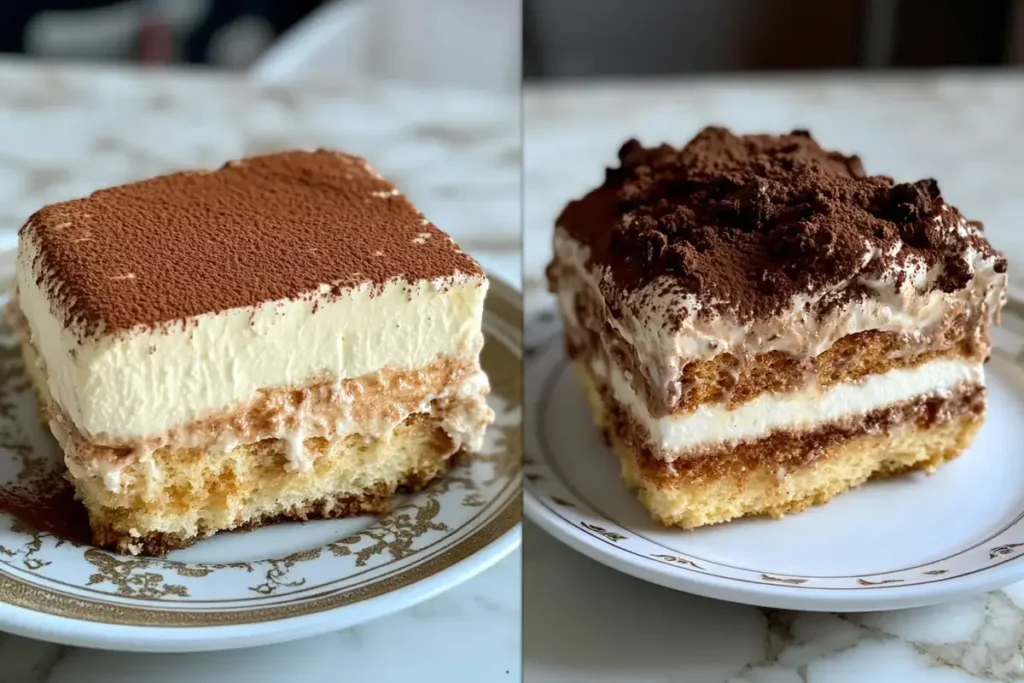
The Technique: How It’s Made?
Italian Method
The traditional Italian method involves making zabaglione – whipping egg yolks with sugar until thick and pale, then folding in mascarpone. Some recipes separately whip egg whites to incorporate air. The mixture is light, airy, and incredibly creamy.
Assembly is simple: Quickly dip ladyfingers in espresso (2-3 seconds maximum), layer with mascarpone mixture, repeat, dust with cocoa. That’s it.
Resting time: Authentic tiramisu rests refrigerated for at least 6 hours, preferably overnight, allowing flavors to meld.
American Method
Most American recipes whip heavy cream to stiff peaks, then fold in mascarpone (or cream cheese) and sometimes add gelatin for stability. This creates a cream-based filling rather than egg-based.
Assembly often includes: Longer soaking times for softer ladyfingers, multiple flavor additions, and elaborate presentation.
Serving: Often served immediately or within a few hours, not allowing the traditional overnight rest.
Flavor Profile Differences
Italian Tiramisu: Bold, sophisticated, balanced. The coffee is pronounced but not sweet, the mascarpone is rich and creamy, the cocoa adds bitterness. The Marsala provides depth. It’s an adult dessert not overly sweet, complex, with subtle boozy notes.
American Tiramisu: Sweeter, creamier, milder. The coffee flavor is often subtle, the cream filling is lighter and fluffier. Less alcohol (or none), more sweetness. It’s crowd-pleasing and accessible, designed to appeal to American sweet preferences.
Texture: The Most Noticeable Difference
From my professional experience, this is where you really notice the difference:
Italian: Silky, dense, luxurious. The egg-based cream is almost pudding-like. The ladyfingers soften but maintain some structure. Each bite is rich and indulgent.
American: Lighter, fluffier, airier. The whipped cream base creates a mousse-like texture that’s less dense. Sometimes too soft, with soggy ladyfingers.
My Expert Take
After making both versions extensively, I understand why each exists. Authentic Italian tiramisu is superior in flavor and texture the egg-based zabaglione creates something truly special that whipped cream can’t replicate. The bold coffee and slight bitterness from cocoa create perfect balance.
However, American adaptations address real concerns: raw eggs carry salmonization risk (though minimal with fresh eggs), and many Americans prefer sweeter, less boozy desserts.
For home bakers, I recommend trying the authentic Italian method at least once using pasteurized eggs if you’re concerned about safety. The difference is remarkable.
The Bottom Line
Italian tiramisu uses raw eggs, authentic mascarpone, strong espresso, Marsala, and minimal sweetness for a sophisticated, rich dessert. American tiramisu typically uses whipped cream, cooked or no eggs, milder coffee, less alcohol, and more sweetness for a lighter, crowd-friendly version.
Both are delicious, but they’re fundamentally different desserts. If you want authentic tiramisu, follow the Italian method. If you want a safe, accessible, sweeter version, the American style works perfectly.
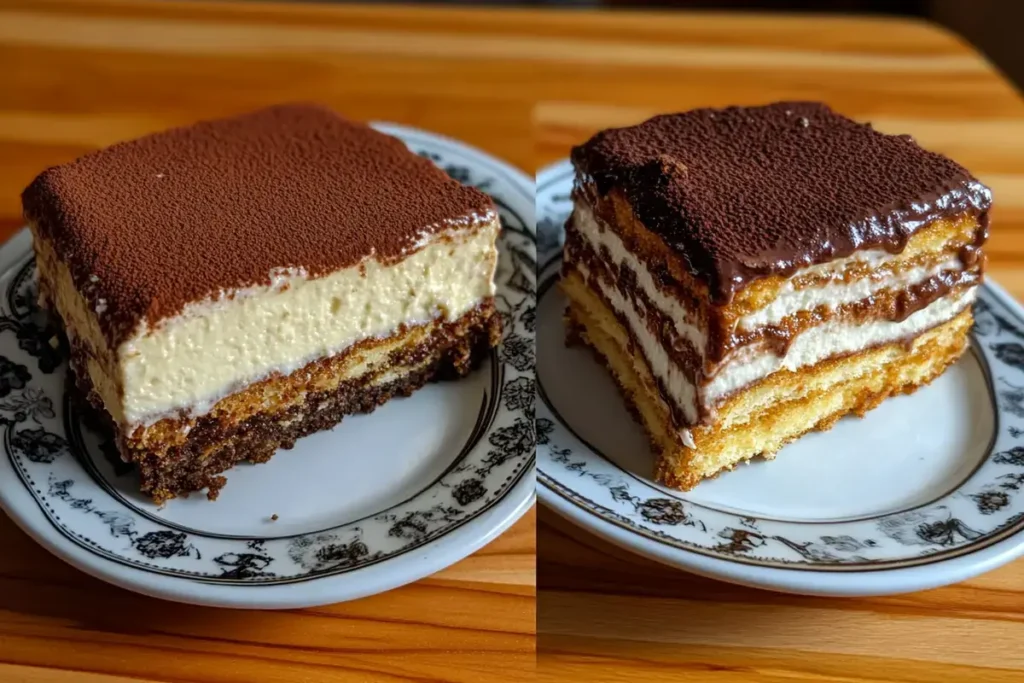
Frequently Asked Questions
Is Italian tiramisu safe to eat with raw eggs?
Traditional Italian tiramisu uses raw eggs, which carries minimal risk when using fresh, high-quality eggs. In Italy, this is standard and considered safe. For American home cooks concerned about safety, use pasteurized eggs (available in most grocery stores) or make zabaglione by gently heating eggs and sugar over a double boiler to 160°F, then cooling before adding mascarpone.
Can I make authentic Italian tiramisu without alcohol?
Technically yes, but the Marsala wine or rum is essential to authentic flavor. The alcohol balances the richness and adds depth that’s hard to replicate. If you must omit it, use strong espresso only, but know it won’t taste like traditional tiramisu. For children or those avoiding alcohol, the American whipped cream version is more appropriate.
What makes Italian mascarpone different from American cream cheese?
Italian mascarpone is a fresh cheese made from cream with much higher fat content (60-75%) than American cream cheese (33%). It’s sweeter, smoother, and more delicate in flavor. Cream cheese is tangier and denser. While cream cheese can substitute in a pinch, it creates a completely different flavor and texture distinctly American, not Italian.
Why do Italian ladyfingers work better than American ones?
Italian Savoiardi biscuits are firmer, drier, and more structured than soft American ladyfingers. They’re designed to absorb espresso quickly without disintegrating. American ladyfingers are cake-like and become mushy when soaked. If you can’t find Savoiardi, order them online they make a significant difference in achieving authentic texture.