
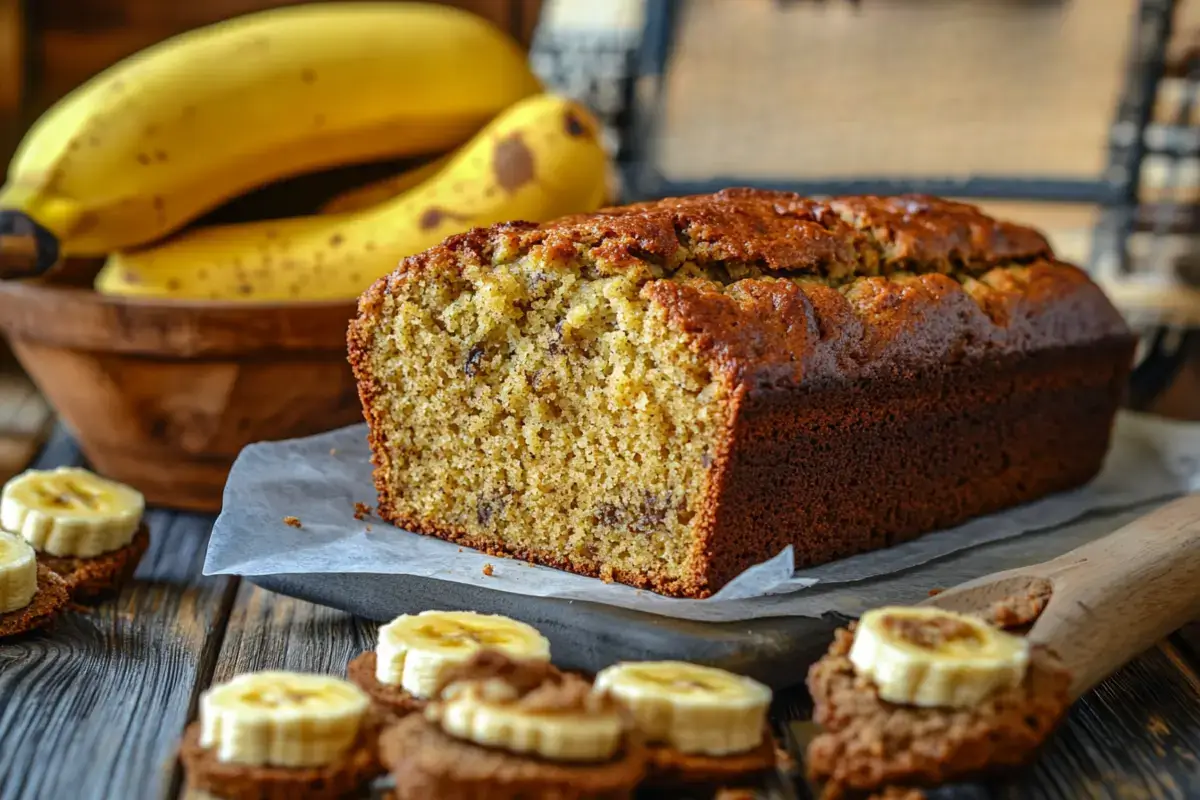
Nothing’s more disappointing than slicing into a freshly baked banana bread only to find it’s dry and crumbly instead of the moist, tender loaf you envisioned. After troubleshooting this issue with hundreds of home bakers through my classes in Chicago and receiving countless emails about this exact problem, I’ve identified the most common culprits and their simple fixes.
The Main Reasons Your Banana Bread Is Dry
Over-Measuring Flour
This is the 1 mistake I see in home kitchens across America. Scooping flour directly from the bag compacts it, adding up to 30% more flour than needed. One cup of properly measured flour weighs 120-125 grams, but packed flour can weigh 150+ grams. That extra flour absorbs moisture, creating a dry, dense texture.
The Fix: Use the spoon-and-level method , spoon flour into your measuring cup and level with a knife. Better yet, invest in a kitchen scale. Since switching my recipes to weights, my students’ success rates have skyrocketed.
Your Bananas Aren’t Ripe Enough
Those yellow bananas with just a few spots? Not ready. Properly ripened bananas should be covered in brown spots with peels turning black. The starch has converted to sugar at this stage, providing maximum moisture and sweetness. I keep bananas ripening on my counter specifically for baking , the uglier, the better.
Quick Ripening Hack: Place yellow bananas in a 300°F oven for 15-20 minutes until skins blacken. Let cool before using. This concentrates sugars and moisture perfectly.
Overbaking Is Killing Your Moisture
Even five minutes too long in the oven transforms moist bread into a dry disappointment. Every oven runs differently , my kitchen oven in Denver runs 15°F hotter than indicated, while my sister’s in Miami runs cooler.
The Perfect Test: Insert a toothpick into the center. It should emerge with a few moist crumbs clinging, not completely clean. The bread continues cooking from residual heat after removal, so slight underbaking ensures perfect moisture.
Temperature and Mixing Mistakes
Using Cold Ingredients
Room temperature ingredients blend more easily, creating better emulsion and moisture distribution. Cold eggs and butter don’t incorporate properly, leaving dry pockets throughout your bread. I set ingredients out 1-2 hours before baking , it makes a remarkable difference.
Overmixing the Batter
Once flour meets liquid, gluten development begins. Excessive mixing creates tough, dry bread with tunnels running through it. Mix wet and dry ingredients until just combined , lumps are perfectly fine. I tell my students: “Mix like you’re folding laundry, not whipping cream.”
Ingredients That Guarantee Moisture
Fat Content Matters
Many recipes skimp on fat, but it’s crucial for moisture. Use the full amount of butter or oil called for. In my tested recipes, I often add an extra tablespoon of melted butter or replace half the butter with oil for extra moisture insurance.
Secret Moisture Boosters
- Sour cream or Greek yogurt (¼ cup): Adds moisture and tender crumb
- Mayonnaise (2 tablespoons): Sounds weird, works brilliantly
- Brown sugar instead of white: Molasses content retains moisture longer
- Extra egg yolk: Adds richness and moisture without excess liquid
Storage Mistakes That Dry Out Bread
Even perfectly moist banana bread becomes dry with improper storage. Never refrigerate unless necessary , it accelerates staling. Instead, wrap completely cooled bread tightly in plastic wrap, then aluminum foil. Store at room temperature for 3 days or freeze for up to 3 months.
Pro tip from my bakery days: Place a slice of white bread in your storage container. It sacrifices its moisture to keep your banana bread fresh , replace daily.
Regional Considerations
Altitude and humidity affect baking significantly. In high-altitude cities like Denver or Salt Lake City, increase liquid by 2-4 tablespoons and reduce baking temperature by 25°F. In humid climates like Houston or New Orleans, you might need slightly less liquid and longer baking times.
My Foolproof Moisture Method
After 20 years perfecting banana bread, here’s my never-fail approach:
- Use overripe bananas (4 large ones)
- Add ¼ cup sour cream
- Use half butter, half oil
- Measure flour by weight (240g for standard loaf)
- Bake at 325°F instead of 350°F for gentler heat
- Remove when toothpick has moist crumbs
FAQs
Q: Can I save already-dry banana bread?
A: Brush slices with simple syrup or warm milk before serving, or toast and spread with butter.
Q: Does bread flour vs. all-purpose matter?
A: Yes! Bread flour absorbs more liquid; stick with all-purpose for moister results.
Q: How do I know my oven’s actual temperature?
A: Use an oven thermometer ($10 investment) to check accuracy and adjust accordingly.
Q: Why is my bread moist inside but dry outside?
A: Temperature too high; reduce by 25°F and tent with foil if browning too quickly.
Bake with confidence!
Jessika