
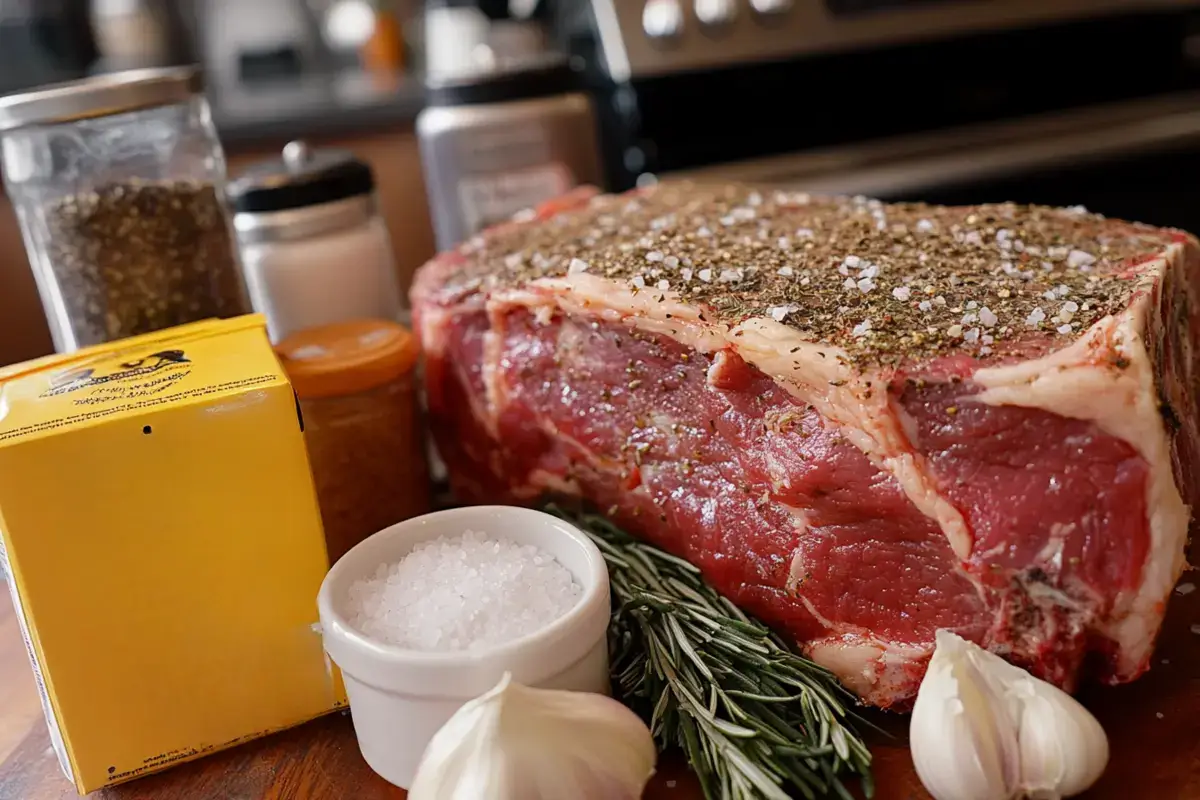
Hey there, fellow food lovers! It’s Jessika from Boldy Recipes, and today I’m sharing my go-to method for seasoning prime rib a technique I’ve perfected over years of holiday cooking and special occasions. There’s nothing quite like slicing into a perfectly seasoned, rosy-pink prime rib roast. Let me walk you through exactly how to season this showstopper cut so it delivers maximum flavor every single time.
The Foundation: Salt Is Your Best Friend
Here’s what I’ve learned from cooking countless prime ribs: generous salting is non-negotiable. I use coarse kosher salt about 1 tablespoon per 2 pounds of meat. The key is applying it at least 4 hours before cooking, though overnight is ideal.
This dry-brining process pulls moisture to the surface, which then dissolves the salt. That salty liquid gets reabsorbed into the meat, seasoning it deeply while also breaking down proteins for a more tender result. Pat your prime rib completely dry before salting, then leave it uncovered in the refrigerator. This also dries out the exterior, which means better crust development.
My Classic Seasoning Blend
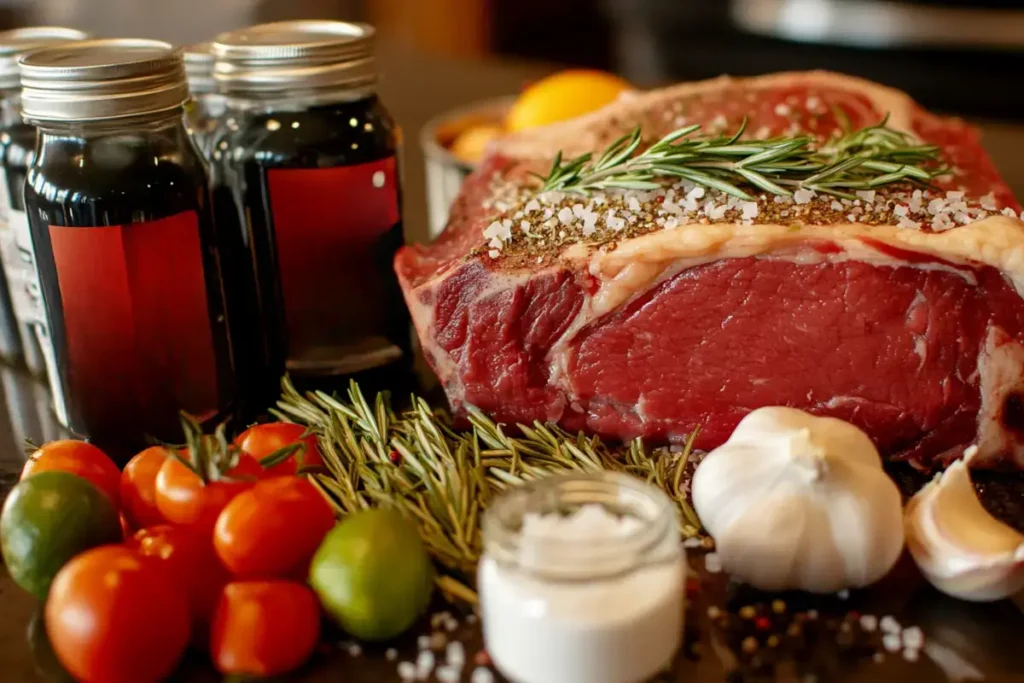
While salt alone can work beautifully, I prefer a simple herb-and-spice mixture that enhances the beef without overpowering it. Here’s my tried-and-true combination:
- Freshly cracked black pepper (2 tablespoons)
- Garlic powder (1 tablespoon)
- Fresh rosemary, minced (2 tablespoons)
- Fresh thyme leaves (1 tablespoon)
- Olive oil (enough to create a paste)
Mix these ingredients into a thick paste and rub it all over the roast about an hour before cooking. The oil helps the seasonings adhere and promotes even browning.
The Garlic Question
Many cooks ask me about fresh garlic. I actually prefer garlic powder for the initial seasoning because it distributes more evenly and won’t burn during the long roasting time. That said, I do press 4-5 fresh garlic cloves into slits I cut into the fat cap. This gives you both the even background flavor of powder and the pungent bursts of roasted fresh garlic.
Timing Matters More Than You Think
The biggest mistake I see home cooks make is seasoning right before the roast goes into the oven. Prime rib is an expensive cut treat it right with proper timing:
4-24 hours before cooking: Apply the kosher salt
1 hour before cooking: Apply the herb-oil paste
30 minutes before cooking: Remove from refrigerator to take the chill off
Bringing your prime rib closer to room temperature ensures more even cooking throughout.
What About Butter?
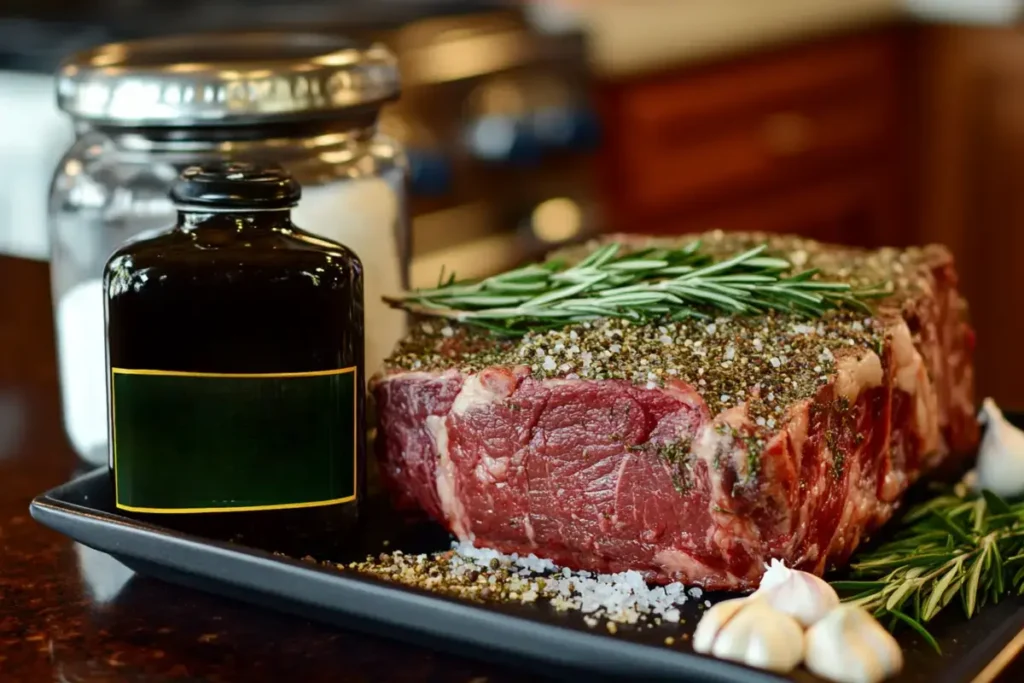
I finish not start with butter. About 30 minutes before the roast is done, I brush it with herb butter (softened butter mixed with minced garlic, rosemary, and thyme). This creates an incredible glossy finish and adds richness without interfering with the crust formation.
Keep It Simple
Prime rib is a premium cut with excellent marbling and natural beefy flavor. Your seasoning should enhance, not mask, these qualities. I’ve seen recipes calling for ten different spices, and honestly? They’re trying too hard.
Salt, pepper, garlic, and woody herbs like rosemary and thyme are classic for a reason they complement beef perfectly. This isn’t the place for experimental spice blends or strong flavors like cumin or cinnamon.
My Final Pro Tip
Save some of your seasoning blend (without salt) to sprinkle on the carved slices just before serving. This gives each bite a fresh pop of flavor and makes the presentation restaurant-worthy.
Trust me, following this straightforward seasoning method will give you a prime rib that’s crusty, flavorful, and perfectly seasoned from edge to center. Your guests will absolutely love it.
FAQs
Q: Can I use table salt instead of kosher salt?
A: Use half the amount table salt is much finer and saltier by volume than kosher salt.
Q: Should I season the bones too?
A: Yes! Rub seasoning on all surfaces, including between the bones if your butcher left them attached.
Q: Can I prep the seasoned roast the night before?
A: Absolutely! In fact, I recommend it. The overnight rest improves both flavor and texture.
Q: What if I don’t have fresh herbs?
A: Use dried herbs at one-third the amount (about 2 teaspoons total). They’re more concentrated than fresh.