
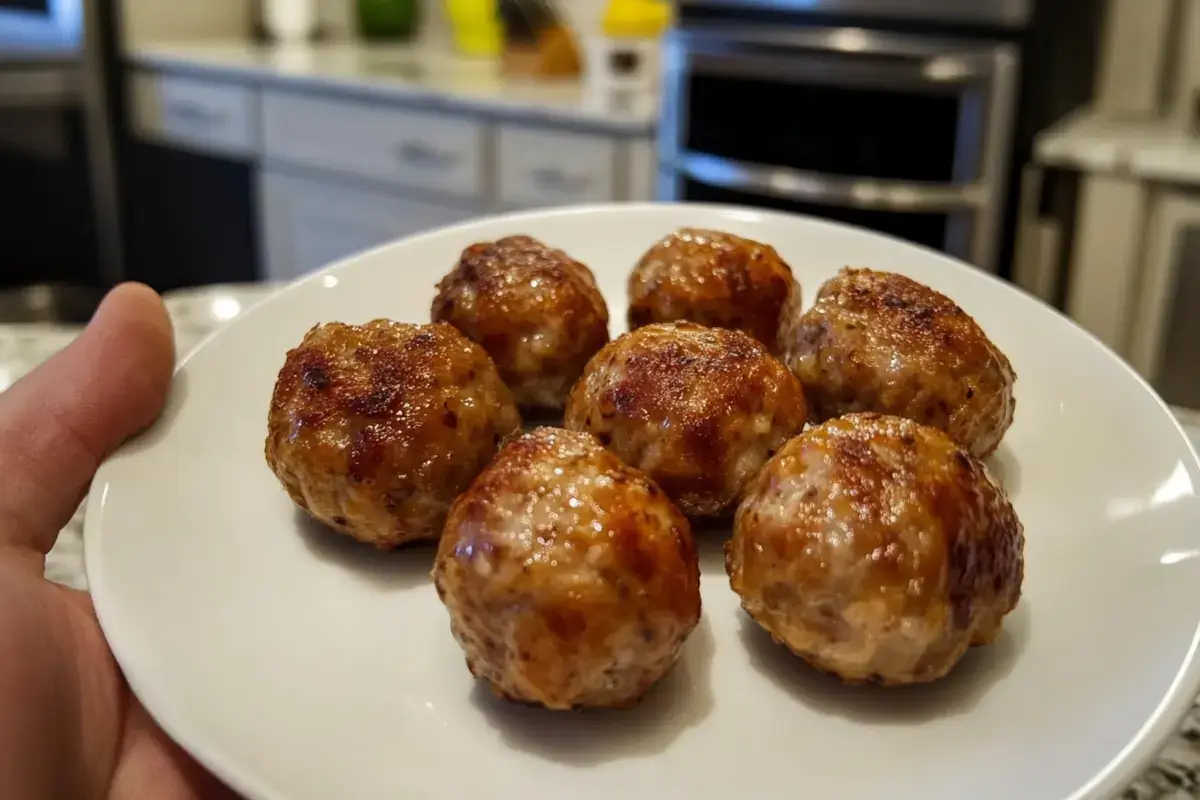
Hey friends, Jessika here from Boldy Recipes! As someone who makes sausage balls regularly and gets asked about their nutritional content constantly, I want to give you the straight facts. Whether you’re tracking calories, planning party portions, or just curious about what you’re eating, understanding the calorie content in sausage balls helps you make informed choices. Let’s break down the numbers!
The Quick Answer: 280-360 Calories
Four standard sausage balls contain approximately 280-360 calories, depending on size and recipe variations.
Here’s the breakdown per individual ball:
- 1 sausage ball: 70-90 calories
- 2 sausage balls: 140-180 calories
- 4 sausage balls: 280-360 calories
- 6 sausage balls: 420-540 calories
This range accounts for different recipes, ingredient brands, and ball sizes. I’ll explain what affects this range below.
Complete Nutritional Breakdown (Per 4 Balls)
Based on the classic recipe using regular pork sausage, sharp cheddar, and Bisquick, here’s what you’re getting in four standard 1-inch sausage balls:
Calories: 320 (average)
Total Fat: 22-24g
Saturated Fat: 9-11g
Cholesterol: 50-60mg
Sodium: 580-650mg
Carbohydrates: 16-18g
Fiber: 0-1g
Protein: 12-14g
What This Means: Sausage balls are high in fat and protein, moderate in carbs, and relatively high in sodium. They’re calorie-dense for their size.

What Affects Calorie Content?
After making countless batches with different ingredients, I’ve learned exactly what changes the calorie count:
1. Sausage Type
Regular pork sausage (most common): 70-90 calories per ball
Turkey sausage: 55-70 calories per ball (25% fewer calories)
Spicy/hot sausage: Similar to regular, 70-90 calories
Chicken sausage: 60-75 calories per ball
The fat content in sausage makes the biggest difference. Regular pork sausage contains 20-30% fat, while turkey sausage is much leaner.
2. Cheese Amount and Type
Sharp cheddar (standard): Adds about 25-30 calories per ball
Reduced-fat cheddar: Saves about 10 calories per ball
Extra cheese recipes: Can add 15-20 calories per ball
Cream cheese additions: Add 30-40 calories per ball
3. Size Matters
Small (¾-inch): 50-60 calories each
Standard (1-inch): 70-90 calories each
Large (1½-inch): 110-130 calories each
Most recipes yield 1-inch balls. Using a cookie scoop ensures consistency, which helps with calorie counting.
4. Additional Ingredients
Ranch seasoning mix: Adds negligible calories (5-10 per batch)
Cream cheese (8 oz added): Adds about 20 calories per ball
Jalapeños or vegetables: Add minimal calories (5 or less per ball)
Portion Size Context
Understanding appropriate serving sizes helps with calorie management:
As an appetizer: 2-4 sausage balls (140-360 calories) is standard
As a snack: 2-3 balls (140-270 calories) is reasonable
At parties: People typically eat 3-6 balls (210-540 calories)
For context, four sausage balls have roughly the same calories as:
- 2 slices of pepperoni pizza
- A large blueberry muffin
- 1½ glazed donuts
- 5-6 chicken wings
Making Lower-Calorie Sausage Balls
If you’re watching calories but still want to enjoy sausage balls, here are my tested modifications:
Use turkey sausage: Saves 60-80 calories per 4 balls
Reduce cheese to 1½ cups: Saves 40-50 calories per 4 balls
Make them smaller: ¾-inch balls mean more volume for fewer calories
Add vegetables: Diced bell peppers or onions add volume without significant calories
My Lightest Recipe: Using turkey sausage, reduced-fat cheese, and ¾-inch sizing brings 4 balls down to about 200-220 calories a 30% reduction.
However, I’ll be honest: the flavor and texture aren’t quite the same as the original. It’s a trade-off.
My Professional Take on Sausage Ball Calories
As a chef who values both delicious food and mindful eating, here’s my perspective: sausage balls are a treat food, not an everyday snack. At 70-90 calories each, they’re similar to other party appetizers like pigs in a blanket, cheese balls, or spinach dip with crackers.
My approach: I enjoy the full-fat version at parties but practice portion control. Four sausage balls with a veggie tray satisfies me completely without going overboard. I’d rather eat 3-4 amazing, flavorful sausage balls than 6-7 low-calorie ones that don’t taste as good.
If you’re counting calories for weight management or health reasons, budget them in. Four sausage balls as part of a balanced day is completely reasonable for most people.
The Bottom Line
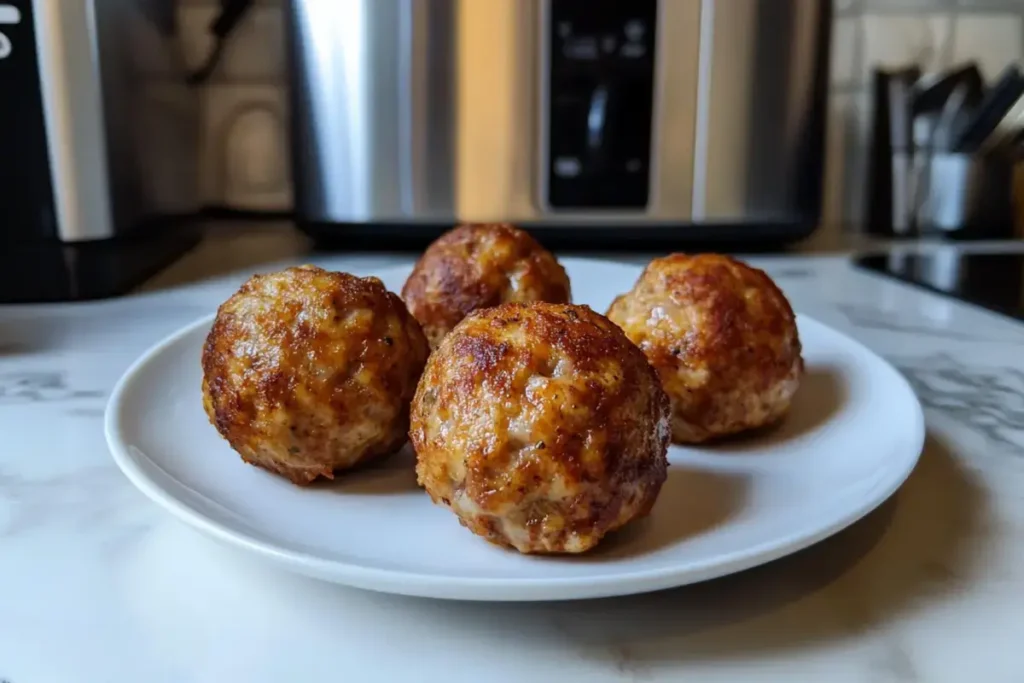
Four standard sausage balls contain approximately 320 calories , similar to a small meal or substantial snack. They’re high in fat and protein, making them satisfying despite their small size.
The calorie content varies based on sausage type , cheese amount, and size, but generally falls in the 280-360 calorie range for four pieces. You can reduce calories by using turkey sausage and making them smaller, but the classic recipe using regular pork sausage and sharp cheddar delivers the best flavor.
Enjoy them mindfully at parties and special occasions, and they fit perfectly into a balanced diet.
Frequently Asked Questions
Are sausage balls high in calories?
Yes, they’re calorie-dense at 70-90 calories per 1-inch ball. However, they’re also high in protein and fat, making them quite filling. Four balls (280-360 calories) is comparable to other party appetizers and snacks.
How can I reduce calories in sausage balls?
Use turkey sausage instead of pork (saves 20-25 calories per ball), reduced-fat cheese (saves 10 calories per ball), and make them smaller. You can reduce a 4-ball serving from 320 to about 220 calories with these modifications.
How many sausage balls equal a meal?
Calorie-wise, 5-6 sausage balls (350-540 calories) approximate a light meal. However, they lack vegetables and fiber, so they’re not nutritionally balanced as a complete meal. They work best as appetizers or snacks.
Are turkey sausage balls healthier than pork?
Turkey sausage balls have fewer calories and less saturated fat, making them lighter. However, they can be drier and less flavorful. “Healthier” depends on your goals , for calorie reduction, yes; for satisfaction and portion control, regular pork might actually work better.