
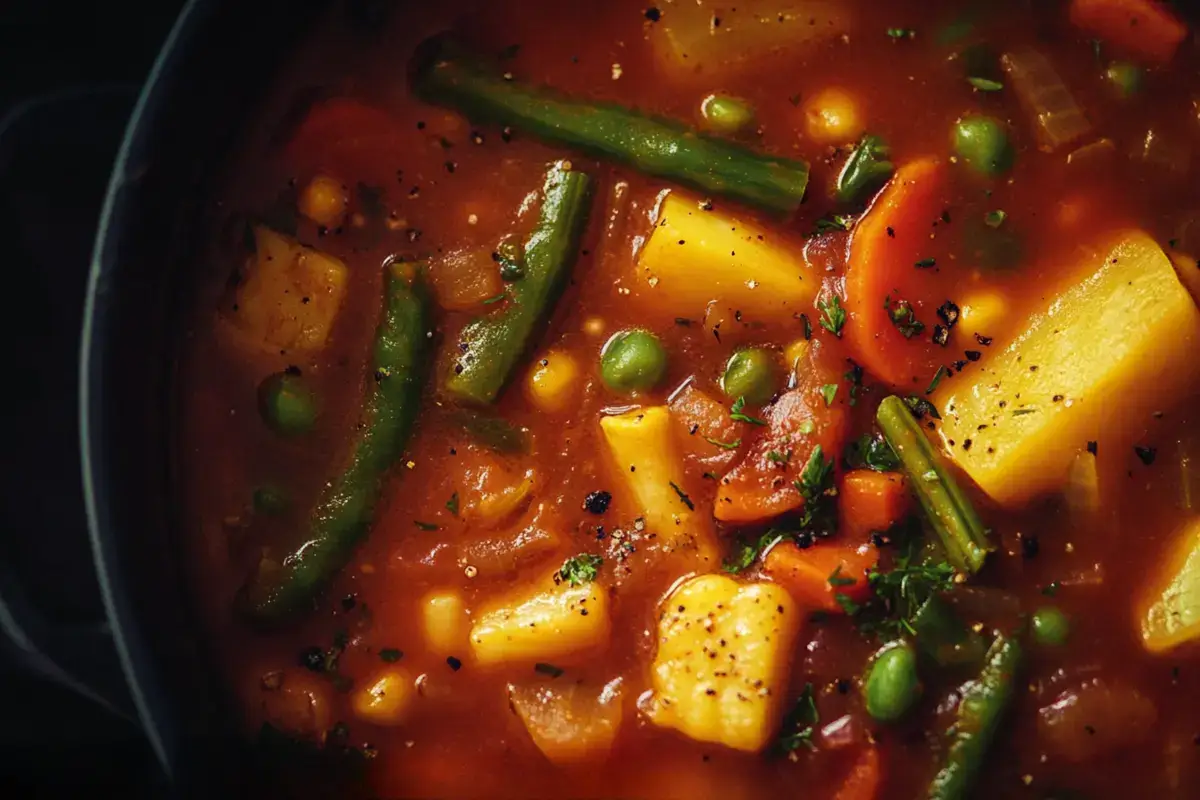
One of the most common questions I get from readers is how to make vegetable soup taste rich and complex instead of flat and one-dimensional. Creating depth of flavor is all about building layers it’s not just about adding more ingredients, it’s about using specific techniques that create complexity. After years of perfecting my vegetable soup game, I’m sharing the exact methods I use to create restaurant-quality depth at home.
Want the full recipe? Try my Old Fashioned Vegetable Beef Soup Recipe.
Roast Your Vegetables First
This is hands-down the most impactful technique for depth. Before they even hit the pot, I roast half of my vegetables carrots, onions, tomatoes, and bell peppers in a 425°F oven until they’re caramelized and slightly charred, about 25-30 minutes.
Roasting concentrates sugars and creates hundreds of new flavor compounds through caramelization. When these roasted vegetables simmer in the soup, they release deep, sweet, complex flavors that raw vegetables simply can’t provide. The difference is dramatic.
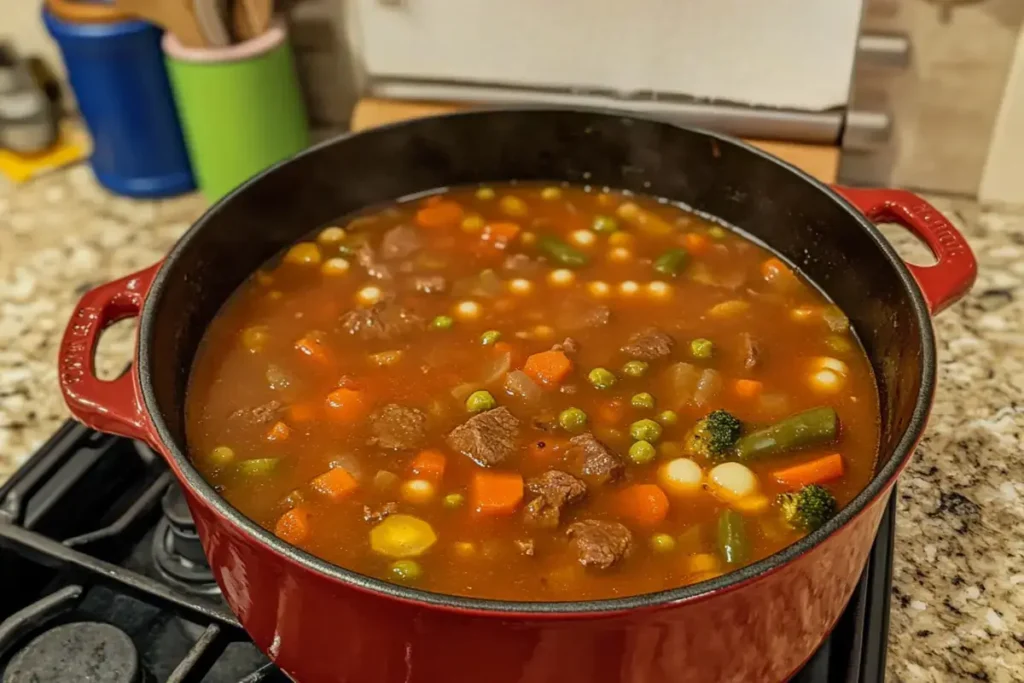
Build a Proper Soffritto Base
Instead of just throwing vegetables in broth, I always start with a proper aromatic base. For classic vegetable soup, I sauté diced onions, carrots, and celery (the holy trinity) in olive oil or butter over medium heat for 10-12 minutes until deeply golden.
The key word is patience. Let them actually caramelize not just soften. Those brown bits stuck to the bottom of your pot? That’s pure flavor. Deglaze with a splash of wine or broth to capture every bit.
Layer Your Liquids
I never use just one liquid. Combining different liquids creates complexity you can’t achieve with broth alone. My typical formula:
- 4 cups vegetable or chicken broth (the base)
- 2 cups crushed tomatoes (body and acidity)
- 1 cup dry white wine (brightness and depth)
- 1 cup water (to adjust consistency)
The wine adds acidity and subtle complexity. The tomatoes provide umami and body. Together, they create a multidimensional base.
Incorporate Umami-Rich Ingredients
Umami is the secret to savory depth that makes people say, “Wow, what’s in this?” I add at least two of these umami powerhouses to every pot:
- Tomato paste (2-3 tablespoons, sautéed with aromatics)
- Soy sauce or tamari (1-2 tablespoons)
- Dried mushrooms (porcini especially, soaked and chopped)
- Miso paste (1-2 tablespoons stirred in at the end)
- Parmesan rind (simmered with soup, removed before serving)
These ingredients add savory complexity without being identifiable they work behind the scenes to make everything taste richer.
Use Fresh and Dried Herbs
Here’s my technique: dried herbs early, fresh herbs late. I add dried bay leaves, thyme, and oregano at the beginning to infuse throughout cooking. Then I finish with fresh parsley, basil, or dill right before serving.
This double-herb approach creates both deep background flavor and bright, fresh top notes. It’s the difference between one-dimensional and complex.
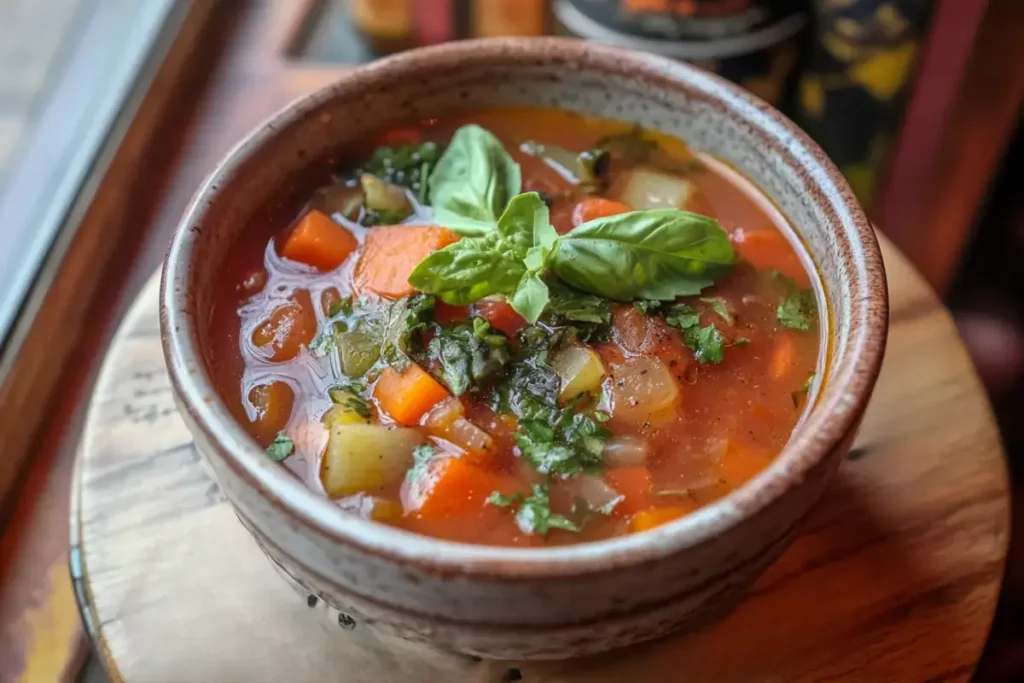
Don’t Skip the Acid
Acid is absolutely crucial for depth. Without acid, flavors taste muddy and dull. I add brightness in the final minutes with red wine vinegar, balsamic vinegar, or fresh lemon juice just 1-2 tablespoons completely transforms the soup.
Taste before and after adding acid, and you’ll immediately understand why this step matters. The flavors suddenly pop and become distinct.
The Long Simmer Secret
While quick soups have their place, nothing replaces time for building depth. I simmer my vegetable soup for at least 90 minutes longer if possible. This allows flavors to meld, develop, and become more complex.
Low and slow lets aromatics break down, releases flavor compounds from vegetables, and concentrates the broth naturally as liquid reduces slightly.
Finish With Fat
Professional kitchens always finish soups with fat because fat carries flavor to your palate. Right before serving, I stir in a tablespoon of butter, a drizzle of high-quality olive oil, or even a splash of heavy cream.
This final enrichment makes all those layers of flavor you’ve built coat your tongue and linger longer.
Season in Stages
I season with salt at three different points: when sautéing aromatics, after adding liquid, and just before serving. This layered salting builds depth rather than one-dimensional saltiness. Each addition enhances what’s already there.
FAQs
Q: Can I use water instead of broth?
A: You can, but add extra umami boosters (tomato paste, soy sauce, miso) to compensate for the lack of depth from broth.
Q: How do I know if my soup has enough depth?
A: The flavor should be complex with distinct layers sweet, savory, slightly acidic not flat or one-note. You shouldn’t need to keep adding salt.
Q: Does soup really taste better the next day?
A: Yes! The flavors continue to meld and develop. I often make vegetable soup a day ahead for this reason.
Q: What’s the single most important technique for depth?
A: If I had to choose one, it’s properly caramelizing your aromatics at the beginning. That foundation makes everything else better.