
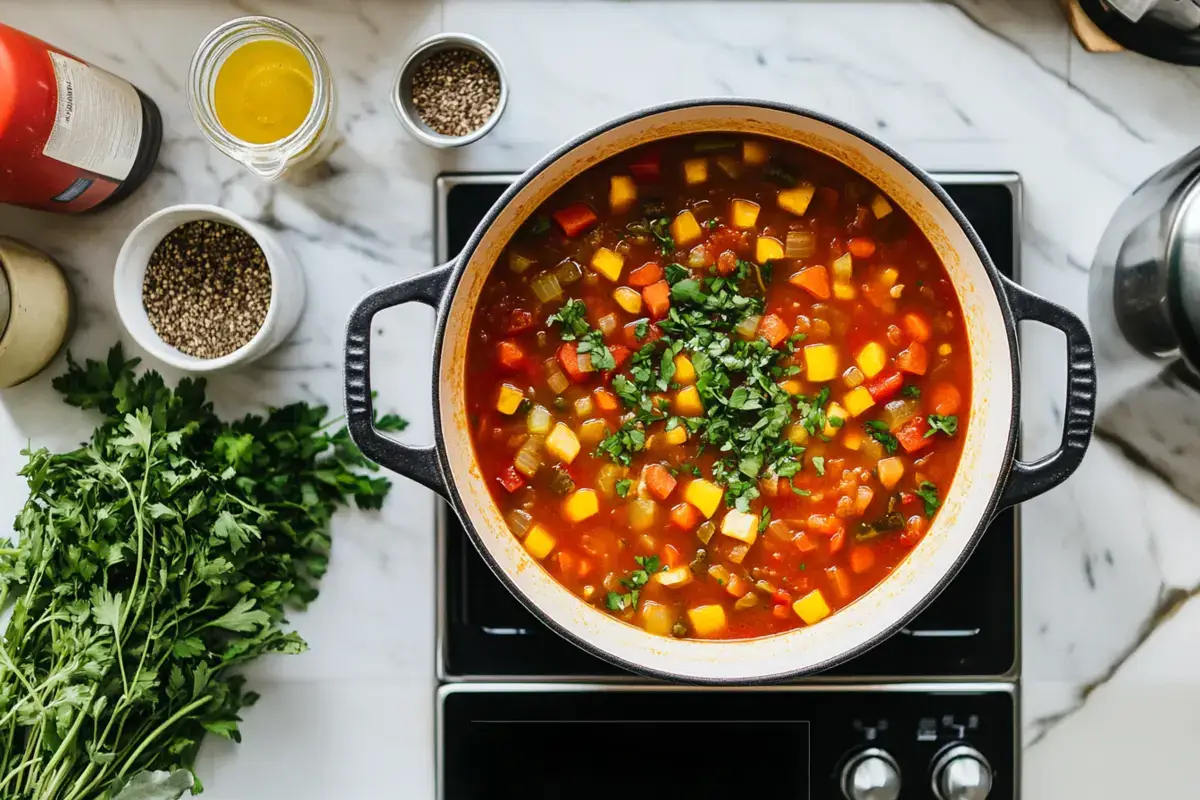
Hey friends, it’s Jessika from Boldy Recipes! I’ve made countless pots of vegetable soup over the years, and I know the struggle sometimes it just tastes flat or watery, no matter how many vegetables you throw in. The good news is that transforming bland vegetable soup into something incredible doesn’t require fancy ingredients or culinary school training. Let me share the flavor-boosting techniques I use every single time to create vegetable soup that’s actually crave-worthy.
Start With Proper Browning
Here’s the biggest mistake I see: dumping everything into the pot at once. Instead, sauté your onions, carrots, and celery in olive oil or butter until they’re caramelized and golden brown about 8-10 minutes. This creates depth through the Maillard reaction, giving you that rich, complex base flavor that simmering alone can’t achieve.
Add garlic in the last minute of sautéing. This releases its flavor without burning it.
Use Better Broth
Honestly, water makes watery soup. I always use high-quality vegetable or chicken broth as my base. Even better, I keep homemade broth in my freezer specifically for soups. If you’re using store-bought, choose low-sodium versions so you can control the salt level yourself.
For extra richness, I replace one cup of broth with dry white wine. The acidity brightens all the other flavors beautifully.
Add Tomato Paste
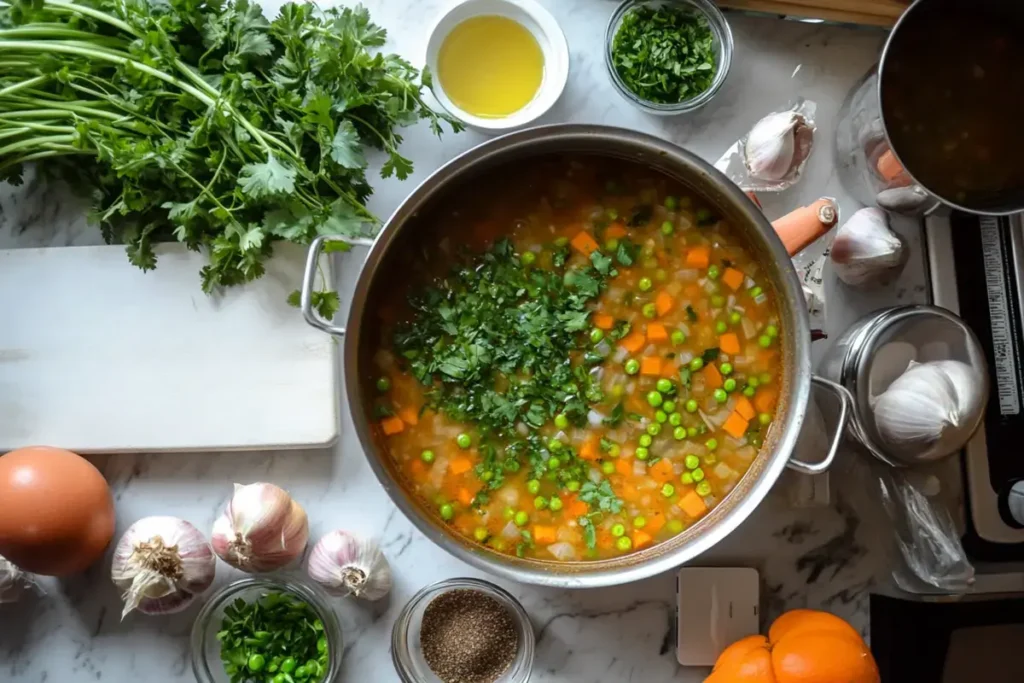
This is my secret weapon. Two tablespoons of tomato paste, sautéed with the aromatics for about a minute, adds incredible umami depth and richness without making the soup taste like tomatoes. It creates a savory backbone that makes people ask, “What’s in this?”
The Power of Acid
A splash of acid at the end completely transforms vegetable soup. I add 1-2 tablespoons of red wine vinegar, lemon juice, or balsamic vinegar right before serving. This brightens all the flavors and makes everything taste more vibrant. It’s the difference between “meh” and “wow.”
Start with one tablespoon, taste, and add more if needed. You want to taste brightness, not sourness.
Herbs: Fresh and Dried
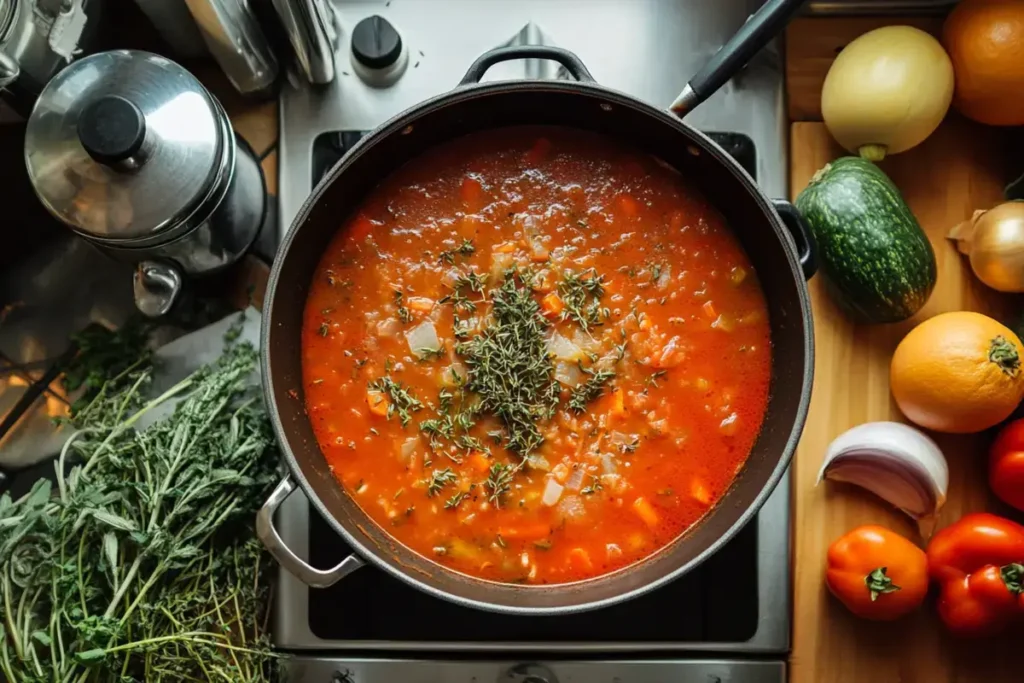
I use both for maximum impact. Dried herbs go in early bay leaves, thyme, and oregano simmer with the soup, infusing everything with flavor. But here’s the key: add fresh herbs at the end. A handful of chopped fresh parsley, basil, or dill stirred in just before serving adds a pop of fresh flavor that dried herbs can’t match.
Umami Boosters
To create that satisfying, savory depth, I add umami-rich ingredients:
Soy sauce or tamari (1-2 tablespoons) adds saltiness and depth
Worcestershire sauce (1 tablespoon) contributes complexity
Miso paste (1-2 tablespoons dissolved in warm broth) adds incredible savory richness
Parmesan rind simmered in the soup releases amazing flavor remove before serving
Don’t Forget the Fat
Fat carries flavor. A drizzle of good quality olive oil or a pat of butter stirred in at the end adds richness and helps carry all those wonderful flavors to your taste buds. I also love finishing individual bowls with a drizzle of herb-infused oil.
Spices Make a Difference
Beyond salt and pepper, I add:
Smoked paprika for subtle smokiness
Red pepper flakes for gentle heat
Ground cumin for earthiness
Black pepper freshly cracked, added at the end
Even ½ teaspoon of the right spice can elevate the entire pot.
The Salt Strategy
Here’s what I’ve learned: salt in layers. Season lightly when sautéing aromatics, again when adding broth, and adjust at the end. This builds flavor throughout rather than creating one-dimensional saltiness. Always taste before serving and adjust this final seasoning is crucial.
Texture Matters Too
For more complex, interesting soup, I puree about one-third of it with an immersion blender, then stir it back in. This creates body and richness while keeping plenty of chunky vegetables for texture.
FAQs
Q: Can I add meat to vegetable soup for more flavor?
A: Absolutely! Bacon, pancetta, or Italian sausage browned at the beginning adds incredible savory depth to vegetable soup.
Q: What if my soup is already made but tastes bland?
A: Add acid (vinegar or lemon), fresh herbs, a splash of soy sauce, and adjust salt. These can rescue already-made soup.
Q: Should I add salt during cooking or at the end?
A: Both! Layer salt throughout cooking, then adjust at the end. This builds better flavor than adding it all at once.
Q: How much difference does homemade broth really make?
A: Enormous difference. Homemade broth adds depth store-bought can’t match. But quality store-bought is still better than water.