
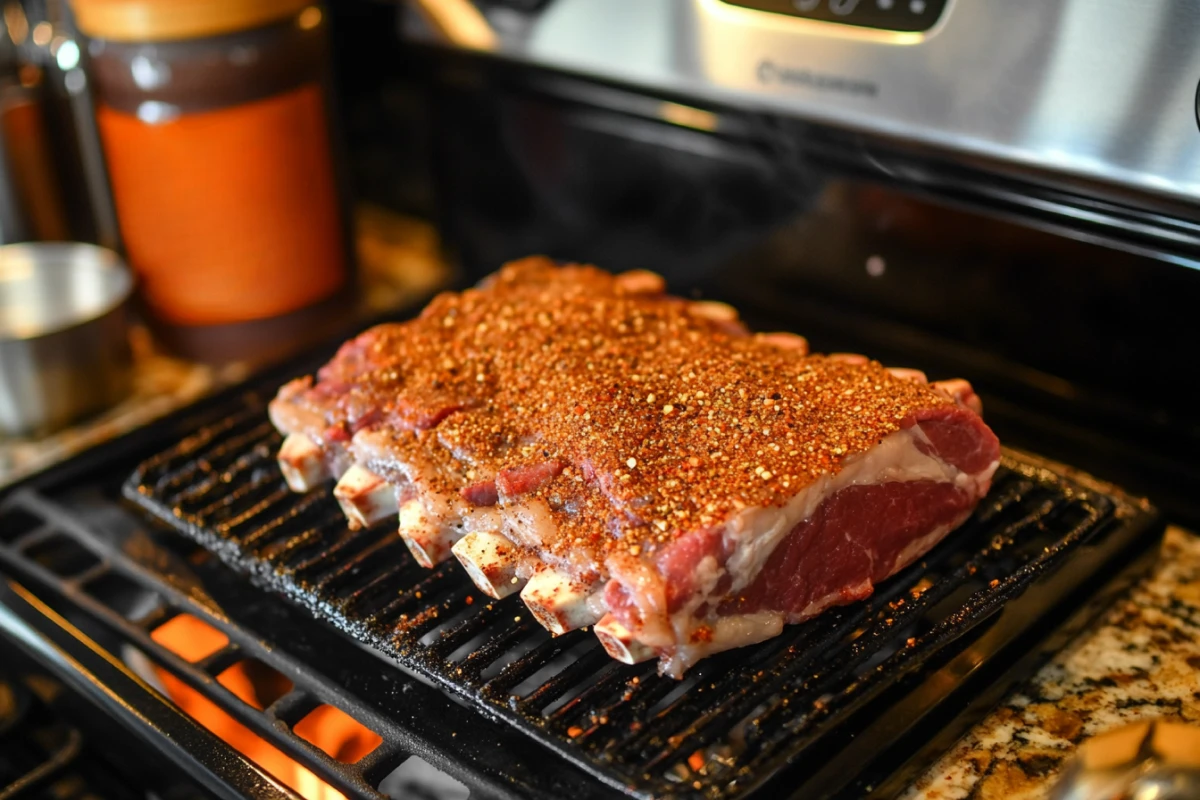
Hi friends, Jessika here from BoldyRecipes.com! After perfecting prime rib preparations in high-end steakhouses from Chicago to Dallas, I’m sharing my signature dry rub that transforms this premium cut into an unforgettable centerpiece. This blend has earned raves at countless dinner parties and even converted traditional sauce-only believers.
Why Dry Rub Makes Prime Rib Exceptional?
A proper dry rub does more than season it creates a flavorful crust that seals in juices while the interior stays perfectly pink. During my time training under James Beard Award winners in Nashville, I learned that dry-rubbed prime rib develops complex flavors through the Maillard reaction, producing that coveted restaurant-quality crust home cooks struggle to achieve.
The beauty of dry-rubbing prime rib lies in its simplicity and reliability. Unlike marinades that can overpower beef’s natural flavor or make the exterior mushy, a well-balanced rub enhances without masking, creating layers of taste that complement rather than compete.
My Signature Prime Rib Dry Rub Recipe
Base Ingredients:
- 3 tablespoons coarse kosher salt
- 2 tablespoons freshly cracked black pepper
- 2 tablespoons garlic powder
- 1 tablespoon onion powder
- 1 tablespoon smoked paprika
- 2 teaspoons dried thyme
- 2 teaspoons dried rosemary, crushed
- 1 teaspoon cayenne pepper (adjust to taste)
- 1 teaspoon dry mustard powder
Optional Enhancements:
- 1 tablespoon brown sugar (for caramelization)
- 1 teaspoon coffee grounds (adds depth)
- 1/2 teaspoon MSG (umami boost)
This recipe yields enough rub for an 8-10 pound roast, serving 8-12 people. Store excess in an airtight container for up to 6 months.
Application Technique for Maximum Impact
Timing Is Everything
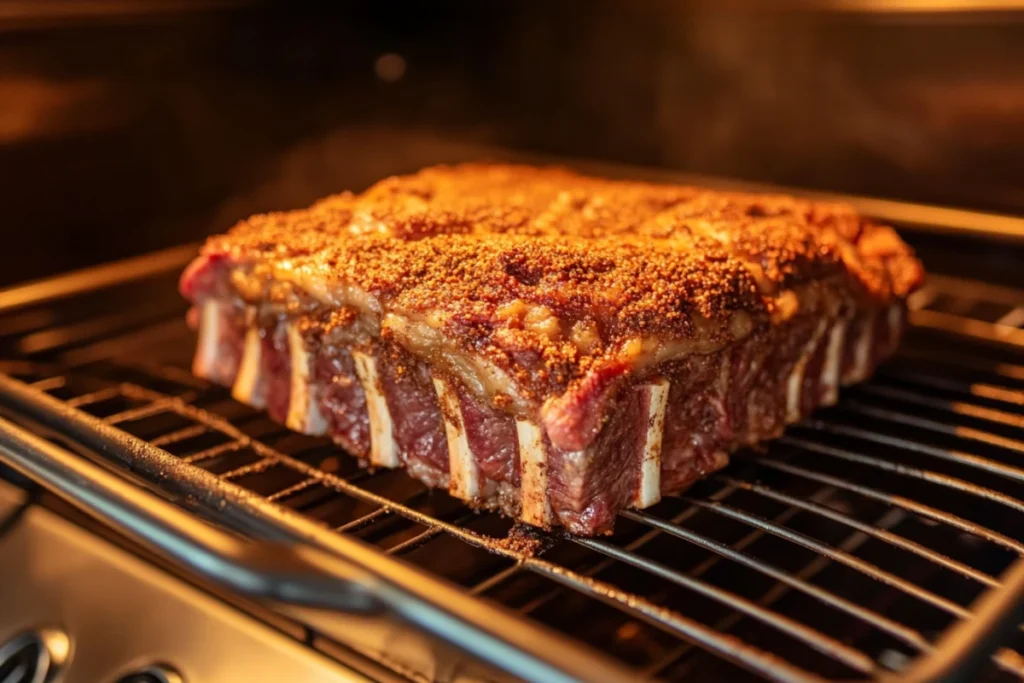
Apply the rub 24-48 hours before cooking. This extended contact time allows salt to penetrate deeply, seasoning throughout while drawing out surface moisture for better crust formation. In my Denver kitchen, where lower humidity affects cooking, I’ve found 36 hours optimal.
The Pat-and-Press Method
First, pat your prime rib completely dry with paper towels moisture is the enemy of crust formation. Coat the entire roast with a thin layer of olive oil or yellow mustard (yes, mustard – trust this Texas pitmaster trick). Apply rub generously, pressing firmly to ensure adherence. Use 2-3 tablespoons per pound of meat.
Resting Protocol
Place rubbed roast on a wire rack over a sheet pan, uncovered, in your refrigerator. This air-drying technique, which I learned from San Francisco’s best steakhouses, creates a pellicle a tacky surface layer that helps develop superior crust.
Cooking Methods That Showcase Your Rub
Reverse Sear Method (My Preference)
Start at 250°F until internal temperature reaches 110°F for rare, 120°F for medium-rare. Remove, rest 30 minutes, then blast at 500°F for 15 minutes for crust development. This technique, popular in Kansas City’s premier steakhouses, ensures edge-to-edge pink perfection.
Traditional High-Low Method
Sear at 450°F for 20 minutes, then reduce to 325°F until desired doneness. While simpler, this method requires careful monitoring to prevent overcooking the outer layers.
Pellet Grill Perfection
Set to 225°F with hickory or oak pellets, cooking to temperature. The subtle smoke complements the rub beautifully a technique I perfected during my time in Memphis.
Professional Tips for Success
Quality Matters: Start with USDA Prime or upper-Choice grade beef. I source from local butchers in Seattle’s Pike Place Market when possible. The marbling in quality beef renders beautifully, carrying rub flavors throughout.
Room Temperature Rule: Remove rubbed roast from refrigeration 2-3 hours before cooking. This ensures even cooking cold centers lead to overcooked exteriors.
Digital Thermometer Investment: Precision matters with expensive cuts. Use a leave-in probe thermometer for accuracy. After ruining a $200 roast early in my career in Phoenix, I never cook prime rib without one.
Resting Importance: Rest 20-30 minutes post-cooking. This redistributes juices and allows carryover cooking to finish the job. Temperature will rise 5-10°F during rest.
Flavor Variations by Region
Through my travels across America’s beef capitals, I’ve discovered regional preferences. Add chipotle powder for Southwestern flair, incorporate herbs de Provence for California wine country elegance, or include espresso powder for Pacific Northwest boldness. Each variation tells a story while maintaining the rub’s essential character.
FAQs
Q: Can I use this rub immediately?
A: Yes, but allowing 24+ hours delivers dramatically better flavor penetration and crust development.
Q: What if my roast is bone-in?
A: Apply rub identically; bones insulate meat, so position probe thermometer away from bones.
Q: Should I trim fat before rubbing?
A: Trim to 1/4-inch thickness; some fat renders flavor but excess prevents crust formation.
Q: Can I double the rub recipe?
A: Absolutely! Stored properly, it maintains potency for 6 months and works on other beef cuts.
Create steakhouse-worthy prime rib at home with more tested recipes at BoldyRecipes.com!