

Hey there, breakfast lovers! I’m Jessika from Boldy Recipes, and today I’m sharing my go-to Dutch Baby recipe that never fails to impress. Whether you’re hosting brunch in Seattle, surprising your family in Austin, or just treating yourself in New York, this puffy German pancake will become your new weekend tradition.
What Is a Dutch Baby?
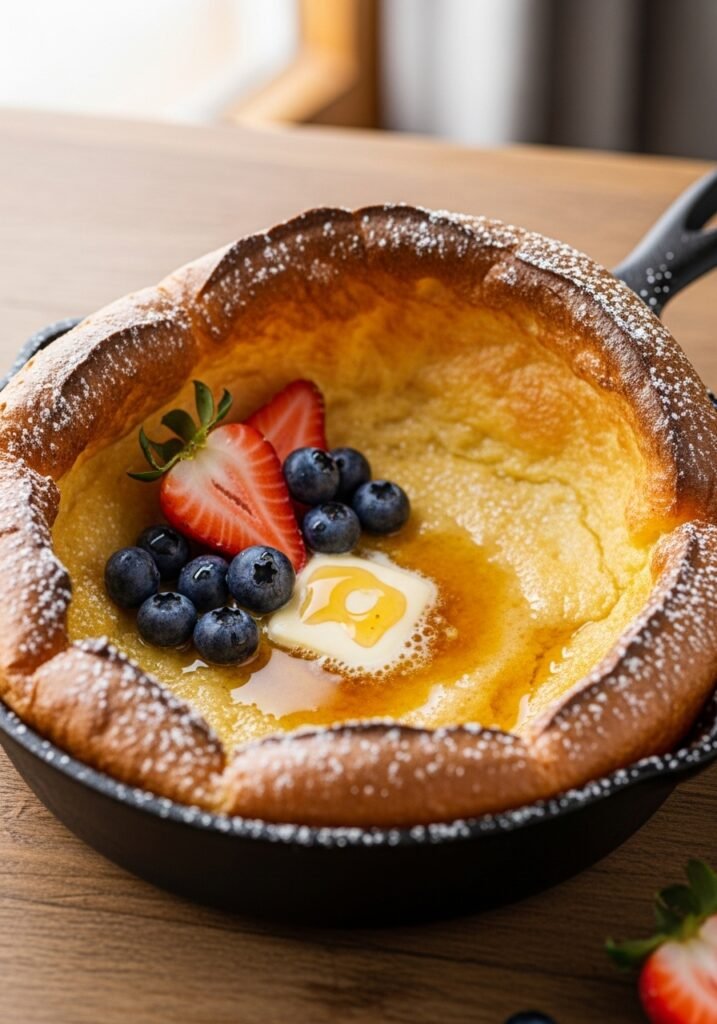
A Dutch Baby, also known as a German pancake or Pfannkuchen, is essentially a large, oven-baked pancake that puffs up dramatically while cooking and deflates into a crispy-edged, custard-like center when removed from heat. Despite its name, it’s actually American-born, popularized by Seattle’s Manca’s Café in the early 1900s.
Essential Ingredients & Equipment
You’ll need just 5 simple ingredients:
- 3 large eggs (room temperature works best)
- ½ cup all-purpose flour
- ½ cup whole milk
- 1 tablespoon granulated sugar
- 3 tablespoons unsalted butter
Equipment:
- 10-inch cast-iron skillet or oven-safe pan
- Blender or whisk
- Oven preheated to 425°F
The Foolproof Method
Step 1: Preheat Like a Pro
Place your cast-iron skillet with butter in the oven while it preheats to 425°F. This is crucial the screaming hot pan creates that signature puff.
Step 2: Blend Your Batter
While the oven heats, blend eggs, flour, milk, and sugar for 30 seconds until smooth. No blender? Whisk vigorously for 2 minutes until completely lump-free. The batter should be thin, similar to crepe batter.
Step 3: The Critical Pour
Once your butter is bubbling and slightly browned (about 5 minutes), carefully remove the skillet and swirl to coat. Immediately pour the batter into the center don’t spread it; let it naturally flow.
Step 4: Bake to Perfection
Bake for 18-20 minutes without opening the oven door. Your Dutch Baby is ready when it’s puffed up dramatically with golden-brown edges and a slightly darker bottom.
Professional Tips for Success
Temperature Matters: Room-temperature ingredients blend better and create a higher rise. Set them out 30 minutes before cooking.
Don’t Peek: Opening the oven door releases steam and causes deflation. Use your oven light to check progress.
Work Quickly: The transition from hot pan to oven should take seconds. Have everything ready before removing the skillet.
Altitude Adjustments: Above 3,000 feet, add an extra tablespoon of flour to prevent over-puffing and collapse.
Serving Suggestions
The classic approach involves a squeeze of fresh lemon juice and a generous dusting of powdered sugar. However, I love these variations:
Sweet Options:
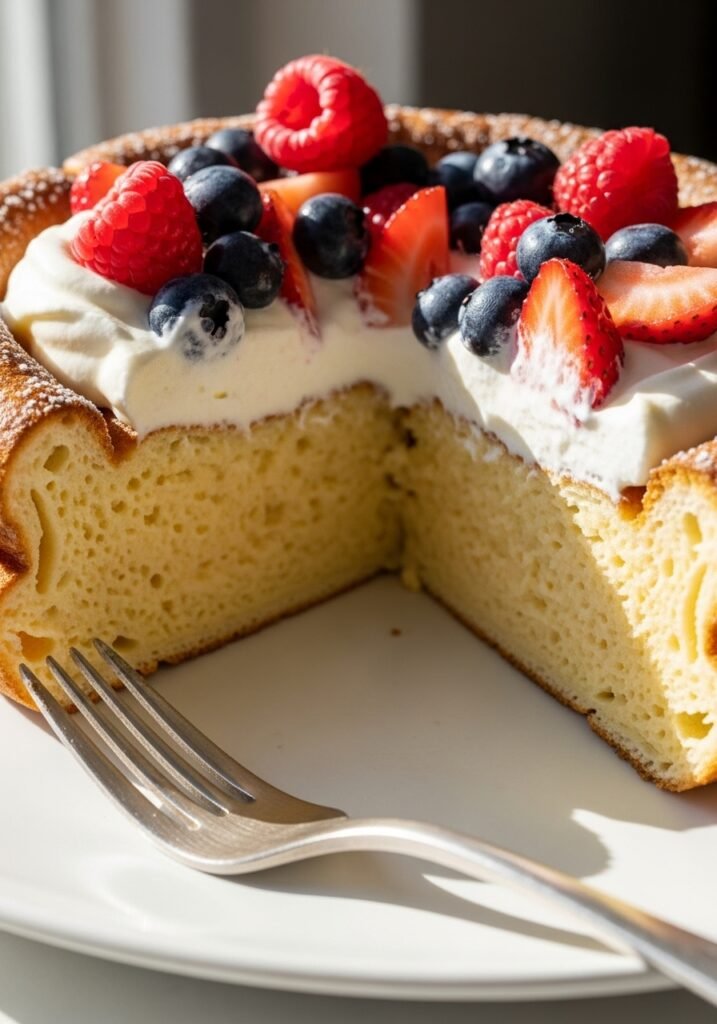
- Fresh berries and whipped cream
- Caramelized apples with cinnamon
- Nutella and sliced bananas
- Maple syrup and crispy bacon
Savory Twists:
- Smoked salmon with chive cream cheese
- Sautéed mushrooms and gruyere
- Prosciutto and fresh arugula
Storage & Make-Ahead Tips
Dutch Babies are best served immediately as they deflate quickly. However, you can prepare the batter up to 4 hours ahead and store it covered in the refrigerator. Give it a quick whisk before using. Leftover portions can be refrigerated for 2 days and reheated in a 350°F oven for 5 minutes.
FAQs
Q: Why did my Dutch Baby not puff up?
A: Usually due to cold ingredients, insufficient oven temperature, or opening the door too early. Ensure everything’s at room temperature and your oven reaches 425°F.
Q: Can I make this gluten-free?
A: Yes! Substitute with 1:1 gluten-free flour blend. Add ¼ teaspoon xanthan gum for better structure.
Q: What size pan works best?
A: A 10-inch cast-iron skillet is ideal. For 9-inch pans, reduce batter by ¼. For 12-inch, multiply recipe by 1.5.
Q: Can I double the recipe?
A: Make separate batches for best results. Doubling in one pan creates uneven cooking and reduced puffing.